

Are CPGs Cooked?
419 brands walk into a bar...

If you like this newsletter, share this with one reader and help us spread the word.
This week starts with a pivot. We’re not going to talk about AI (sort of). Instead, we’re going to talk about the other 493 companies in the S&P 500. You know, the ones that actually make, ship, and sell stuff on shelves.
Why? Because like everything else in this economy, everything is blowing up.
Like every other edition of this newsletter, the provocation comes from the conversations that happen inside the ON_Discourse community. Typically these discussions are private, but I have been granted special permission to spread the word.
It all started with a provocative idea from Andrew A. Rosen in our ON_Discourse Signal Group Chat. He was covering Barry Diller’s rebranding of IAC to People Inc and what it means. If you haven’t followed this story, here is the short version: Diller bought Meredith - the company behind People, Better Homes & Gardens, and Food & Wine - through IAC in 2021. This year he renamed the whole company “People Incorporated” and bet it all on a strategy he calls INVERSION: stop licensing those magazine brands and start making actual products.
In other words: a publishing company that sells ads to readers wants to become a product company that sells stuff to buyers.
Rosen was covering it - as is his style - from a media/business/strategy perspective. Could a media brand that was built on licensing brand deals turn into a D2C CPG brand that sells the same kind of stuff? He wrote a whole Substack post about it that basically tears into the whole concept. You should read it.
His analysis triggered a lot of discussion and exploration about the overall state of CPGs. As much as we like to talk about AI-based disruption, the landscape for CPG launches, exits, and ideas is equally upended.
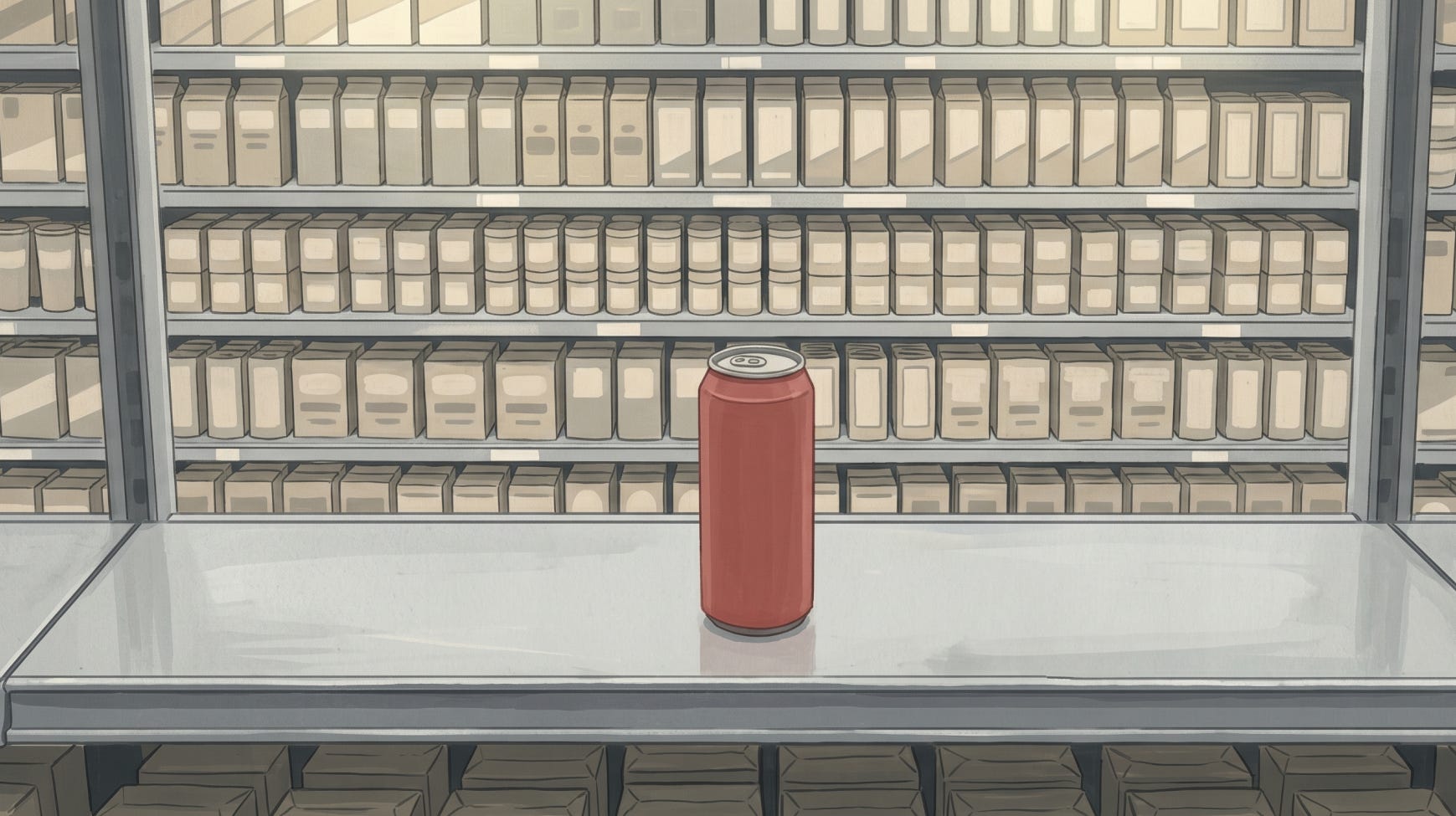
The landscape for new CPG brands is as barren as the landscape for new media brands. We are living through a CPG drought. You might even call it a dustbowl.
But before I get there, let me get this out of the way.
PROVOCATION OF THE WEEK
Name a CPG brand founded after 2020 that matters. Take your time.
Don’t take my word for it. One of the benefits of the ON_Discourse community (and AI-fluent builders) is that it is easy to find the data to back up this claim. This is where I can introduce the second ON_Discourse member who granted permission to be outed, Matt Alldian.
Matt saw Rosen’s provocation and turned it into a research project. He built a tool that pulled 419 brands across 11 credible breakout lists to answer a simple question: who actually broke out in CPG recently, and where did they come from?
The findings were damning. Every giant CPG hit of the last cycle - poppi, Olipop, Liquid Death, Chomps - was founded between 2015 and 2019. They broke out recently, but none of them are new. Post-2020, the cupboard is nearly bare. The only brands with any signal are creator-driven: Feastables (MrBeast), Prime (Logan Paul), Happy Dad (Nelk Boys).
What does this all mean?
Alldian’s deeper analysis shows that the CPG economy didn’t slow down as much as it split in two. On one side, you have the channel operators: Costco, Trader Joe’s, Target, PepsiCo. They own the shelf. They harvest demand they didn’t create. Private label is growing 4x faster than national brands right now. Trader Joe’s launches 1,500 products a year and rotates them constantly. The brand people trust is Trader Joe’s - the individual products are disposable.
On the other side, you have the insurgents: poppi, Liquid Death, Olipop. They discover demand, spike fast, and either get acquired at peak or survive by being something a store brand can’t clone - personality, functional IP, founder narrative.
As Alldian has said, if a CPG launches, rises, and sells in 5 years, is that a failure or a new definition of success? If you think I’m here to answer that, then you must be new here.
CPGs are not cooked. The game just changed. The winners either own the shelf or they spike fast enough to sell to someone who does. Everyone else is in no man’s land.
Now excuse me while I drink this poppi, before PepsiCo finishes swallowing it whole for $1.95 billion.
What’s Next
If you have thoughts, feedback, or a perspective worth sharing, reach out: chmiel@ondiscourse.com. You might see your reaction in next week’s edition.
ON_Member Events
ON_Group Chat: The End of Breakout Brands
Tuesday, May 7, 11-12pm ET
The last truly new giant CPG brand was created by a YouTuber. Every other "breakout" was founded before 2020.
The question we are interested in exploring as part of this conversation is, if the window for new consumer brands is closing, what does that mean for anyone betting on media as a driver of new IP?
ON_Discourse Breakfast Club for AI Leaders: My Kids Will Never Be Smarter Than AI
Wednesday, May 13, 9-11am
Sam Altman says his children will never be smarter than AI, but they’ll be “vastly more capable.” Dr. Becky Kennedy calls this what it is: treating childhood as onboarding for economic performance.
This breakfast is for the people living that contradiction. You spend your days building, funding, and scaling AI. You spend your nights wondering what it’s doing to your kids. This is the conversation you’re not having anywhere else.
ON_Group Chat: Follow My Flow
Neal Mann’s AI Stack
Tuesday, May 12, 11-12pm ET
This is your backstage pass into someone’s real AI workflow, a candid, step-by-step reveal of how their stack actually works in practice. Join us for a close-door sneak peak of Neal Mann’s AI stack and how he build NOAN.
ON_Podcast
Episode 50 The Internet Still Sucks
For the 50th episode of ON_Discourse, Dan, Toby, and Chmiel walk back through the running arguments that have shaped the show — and check which ones aged well, which got dumber, and which still don't have an answer. The smart fridge is still a bad idea, but the home-as-interface thesis underneath it looks better than ever. Bordy is an elegant solution to a problem that may not exist. The internet still sucks, though now we can at least see the agentic layer that might fix it. And somehow, against all odds, someone on LinkedIn this morning declared that we are living in its golden era.
