

Forgetting
What does it mean when you can't remember your work?

We are expanding our membership. If you want to be in the room with other executives who feel free to admit their own ignorance, let us know.
It finally happened. A technology we have been collectively predicting for years is now readily available. And like all novel AI products, it has a terrible name.
Two terrible names, actually.
Meet Clawdbot/Moltbot. A real-life, proactive AI agent that converts personal context into autonomous action. What personal context? For the small, small price of granting a black-box AI agent shell-access to your entire computer, you get a supernatural software superbot.
As you can imagine, our network was neck-deep in this story. Several of our members spent the past week furiously configuring their own mac minis into a semi-safe instance of Moltbot. Within hours, they were chatting with an agent on WhatsApp or Telegram, and watching it do… anything and everything.
Yesterday, we hosted an emergency Group Chat about their experience. The takeaways from our session could write an entire book, but for your sake, I will reduce it down to a single provocation. Just gimme a minute to set it up.
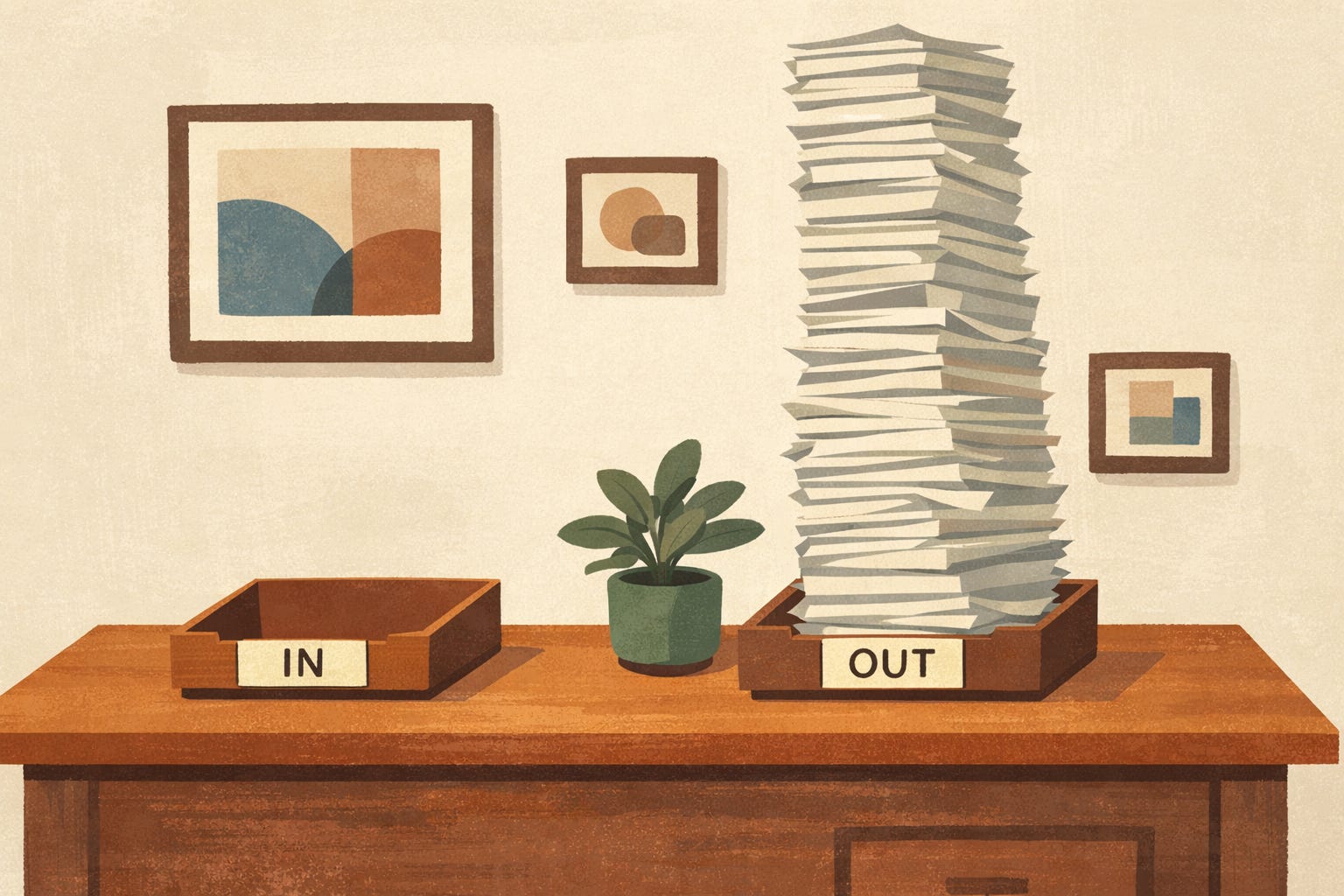
Moltbot promises - and delivers - exponential productivity gains. As one of our members said it “everyday I am producing the work of 30 full time employees.” These gains come with a cost: mental exhaustion and short-term memory gaps.
One member used Moltbot to create a highly successful keynote presentation. This event was a big deal for this person. It involved international travel, a huge audience of executives, and a big, important, enterprise topic. In every possible metric, Moltbot delivered a win.
The most interesting aspect of this story comes one week after the successful presentation. This member cannot remember what it was about.
Provocation of the week
Are you thinking if you can’t remember it?
You probably think I’m exaggerating that story. Don’t take my word for it, here is what they said word-for-word.
“I have very little recall of my work. I did a big keynote last week. It was very well received. I could probably not restate what I told them, because the agent did most of the work. I basically just remembered it in short term memory. And if I’d actually done the work myself, I would have been remembering it, because I would have spent more cycles on it.”
Is this a problem? By all objective measures, this story paints the picture of a very productive future of work. This person successfully delivered a keynote on a critical topic that was well-received. Everybody left happy.
But why do I feel so weird about it?
What’s Next?
If you have thoughts, feedback, or a perspective worth sharing, reach out: chmiel@ondiscourse.com. You might see your reaction in next week’s edition.
ON_Member Events
ON_Group Chats
From Journeys to Outcomes: The Next Era of CX
Thursday, January 29th, 2-3pm ET
As agentic systems mature, experience moves from interaction to delegation. Core provocation: What happens when customers stop searching and start delegating?
Join Mathew Sweezey, Principal Consultant | AI Transformation, Monks and ON_Discourse members to learn more.
Follow My Flow (Pulling back the curtain on someone’s AI stack)
Tuesday, February 3rd, 11am-12pm ET
This is your backstage pass into someone’s real AI workflow, a candid, step-by-step reveal of how their stack actually works in practice. The next host has built an agentic writing stack to assist creative writing.
ON_Podcast
Dr. Ami Bhatt—practicing cardiologist, chief innovation officer, and chair of the FDA's digital health committee—joins Toby and a group of ON_Discourse members who to talk (privately) about what AI can and can't do in medicine. She argues that context, nuance, and edge cases will always belong to humans, while AI handles the compute-heavy work our brains can't do alone. The conversation spans wearables, why TikTok might be the most effective healthcare educator, and why the patient is no longer the "last mile" of healthcare.