


We are expanding our membership. If you want to be in the room with other executives who feel free to admit their own ignorance, let us know.
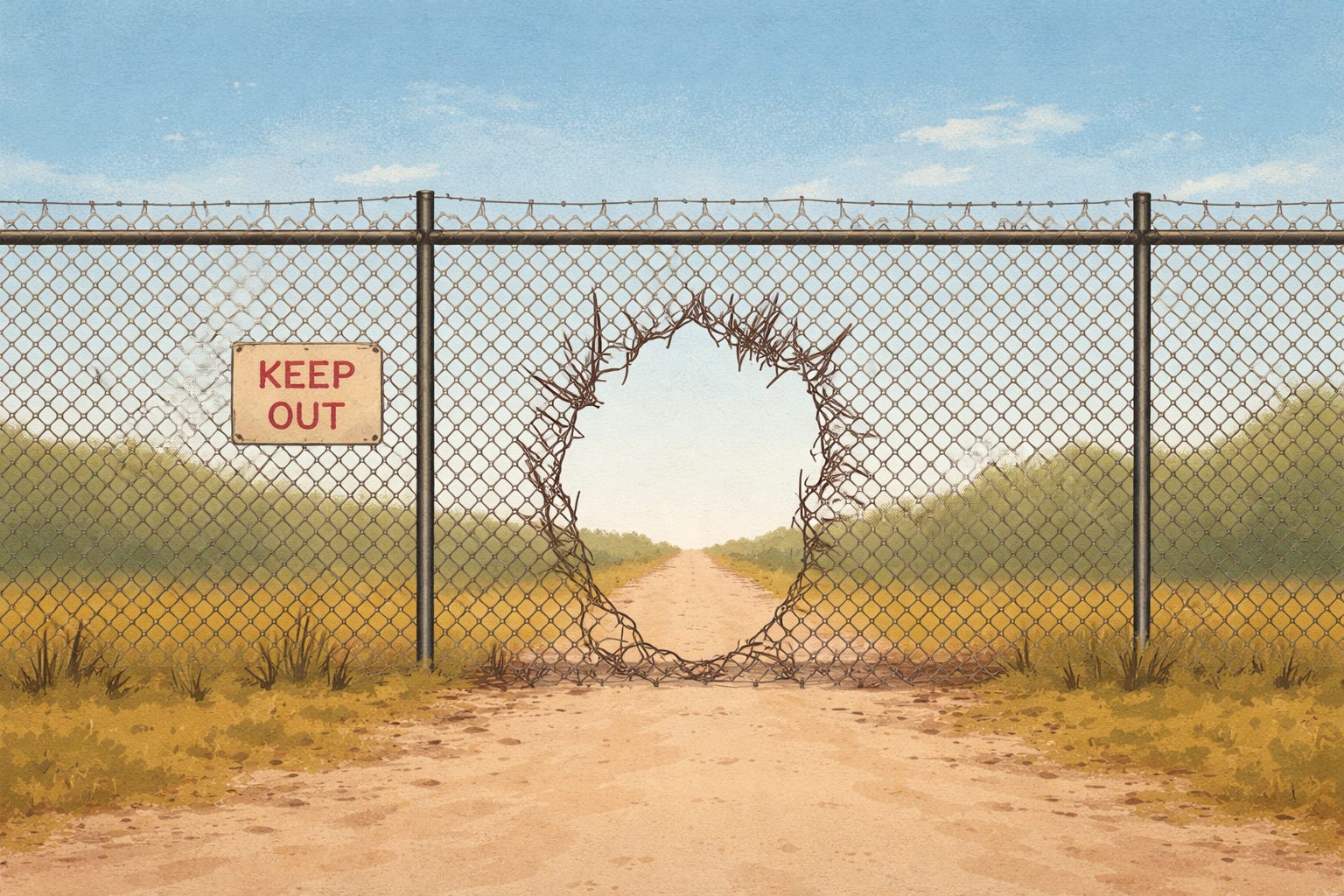
The walls of the internet are about to go up. It started last year.
Last July, Cloudflare became the first major infrastructure company to block AI scrapers by default. They handle traffic for about 20% of the public web. Overnight, a fifth of the internet went from “AI can scrape” to “AI needs permission.” They launched a pay-per-crawl marketplace. They published data showing that OpenAI’s crawlers take 1,700 pages for every single click they send back to publishers. Anthropic’s ratio was 73,000 to 1.
In the halcyon days of 2025, that was a big deal. Then some dude made a thing with 3 terrible names.
OpenClaw is two things at the time: a viral sensation that is dominating our attention, and, a piece of software that is going to change the way the internet works.
In three weeks.
What Cloudflare did 9 months ago is what all of the major platforms are about to do in the face of this agentic sensation. Here’s why: OpenClaw doesn’t use APIs. It doesn’t crawl. It opens a browser, navigates a website, reads the screen, and takes notes — exactly the way you would. The gates Cloudflare built were designed to stop bots. OpenClaw isn’t a bot. It’s an operator.
That is a big deal. And this is a big provocation:
Provocation of the week
this is the provocation
In order to explain this point, I need to highlight 2 things.
Number one: OpenClaw is in the terminal, not the browser. This is what makes it so powerful (and so dangerous). It makes the software more like a human browsing websites than a crawler scooping up data.
Number two: The economic model of the internet is not prepared for this kind of power. Today’s internet - the internet you know and love - is built on databases with pretty front ends. The value isn’t in the interface. It’s in controlling access to what’s behind it.
Before OpenClaw, agent access to data was done at the API level. Then some guy invented a new way to do it, and it was so weird no one thought it would be possible. Agents browsing the web like people: observing pages, taking notes, acting on what they see. Cloudflare can’t do anything about that. Neither can LinkedIn shutting down its API.
This is not going to stop them from trying. We talked all about this phenomenon this week with Sam Broe, the engineer building Domain with us. He has a front-row seat on the new framework for the internet, and it is, frankly, blowing our minds. Sam argues that if a human can see it, an agent can see it, and if you can delegate a task to a personal assistant, you should be able to delegate it to an agent. He’s calling it the “right to delegate.”
But if agents can go anywhere and see anything on your behalf, the next question is: who controls them? How do you authenticate an agent? How do you prove it’s acting for you without handing your credentials over to a system you can’t see? These are permission problems. Identity problems. And if that sounds familiar, it should.
The implications of this technology are impossible to quantify or predict. I won’t try to do it here. Instead, I will leave you with a closing thought that might get your mind spinning: is OpenClaw going to make blockchain relevant again?
That is a question for another week…
What’s Next?
If you have thoughts, feedback, or a perspective worth sharing, reach out: chmiel@ondiscourse.com. You might see your reaction in next week’s edition.
ON_Member Events
ON_Group Chats
The API Lockdown Is Coming: let’s Build Something New
Thursday, February 12, 2-3pm ET
Within 6 months, every AI product built on platform APIs (Slack, LinkedIn, Microsoft) will face an existential choice: get acquired, get cloned, or get cut off.
Incumbent platforms see AI as threat, and we’re already seeing the lockdown starting to happen (OpenAI restrictions, Slack pricing changes, LinkedIn crackdowns).
We are debating a radical alternative: stop requesting API access and build AI agents that operate at the OS level instead, seeing and interacting with apps like humans do.
ON_Discourse Group Chats are live, high-signal discourse driven conversations with AI leaders, builders and operators.
Not your typical Zoom, these are intimate, provocative, deeply practical sessions where we sharpen each others perspectives.
ON_Group Chats
Follow My Flow
Tuesday, February 17, 11-12pm ET
This is your backstage pass into someone’s real AI workflow, a candid, step-by-step reveal of how their stack actually works in practice.
ON_Speakeasy
Member Connections
Wednesday, February 25, 5-8pm ET
Join us for cocktails and excellent conversation with ON_Discourse members, including leaders, founders, builders, and operators.
ON_Podcast
Dan, Toby, and Chmiel welcome Sam Broe, career technologist and architect of (domain), to unpack why Claude Code and the open-source project Claudebot (now OpenClaw) represent something far bigger than a better coding tool. Sam makes the case that giving an AI agent root-level access to your computer fundamentally changes how the internet works — and that the platforms trying to lock down their APIs are already fighting a losing battle.