

The Agents are Coming
Emergency! Everybody to get from street!

If you like this post, share it with one person you know who will appreciate the reference in the title.
Fear hangs in the air. An ominous foreign force is creeping up our shorelines, ready to attack us with unprecedented service. The agents are coming.
Is this an invasion?
Judging by a lot of the conversations I am having, the answer is yes. More and more people I encounter tell me that AI is spreading too far, too fast, and in places they don’t want or need.
AI, they say, has already ruined text. Recent headlines bear this out: A viral chart apparently proves that AI slop for the enshittification of LinkedIn. Companies are taking note: Substack is partnering with Pangram to call out generated text.
The problem is that text is easy to generate and also ignore. The biggest concerns I hear about the incoming AI invasion are that it will infiltrate other experiences in our daily life. AI agents are scheduling our appointments. They are managing our mundane tasks. They are moderating our - ahem - group chats.
On one hand, I get it. Polls show that AI is less popular than ICE. The graduation booing and eye-rolling pitches from over-eager founders is a bore. On the other hand, this technology is incredible, and everyone is using it (even the people that hate it).
PROVOCATION OF THE WEEK
What are we scared of?
All of this presents a curious case of innocent hypocrisy. The commodification of AI co-work is simultaneously a scourge on our culture and a crutch we all lean on.
All of us.
I’ve recently met with academics who all admit - key word - that they secretly work with AI tools but worry about sharing this fact among their peers. These are people that have devoted their entire career to original thinking and care deeply about producing meaningful work.
Is this an AI problem or does it start somewhere deeper?
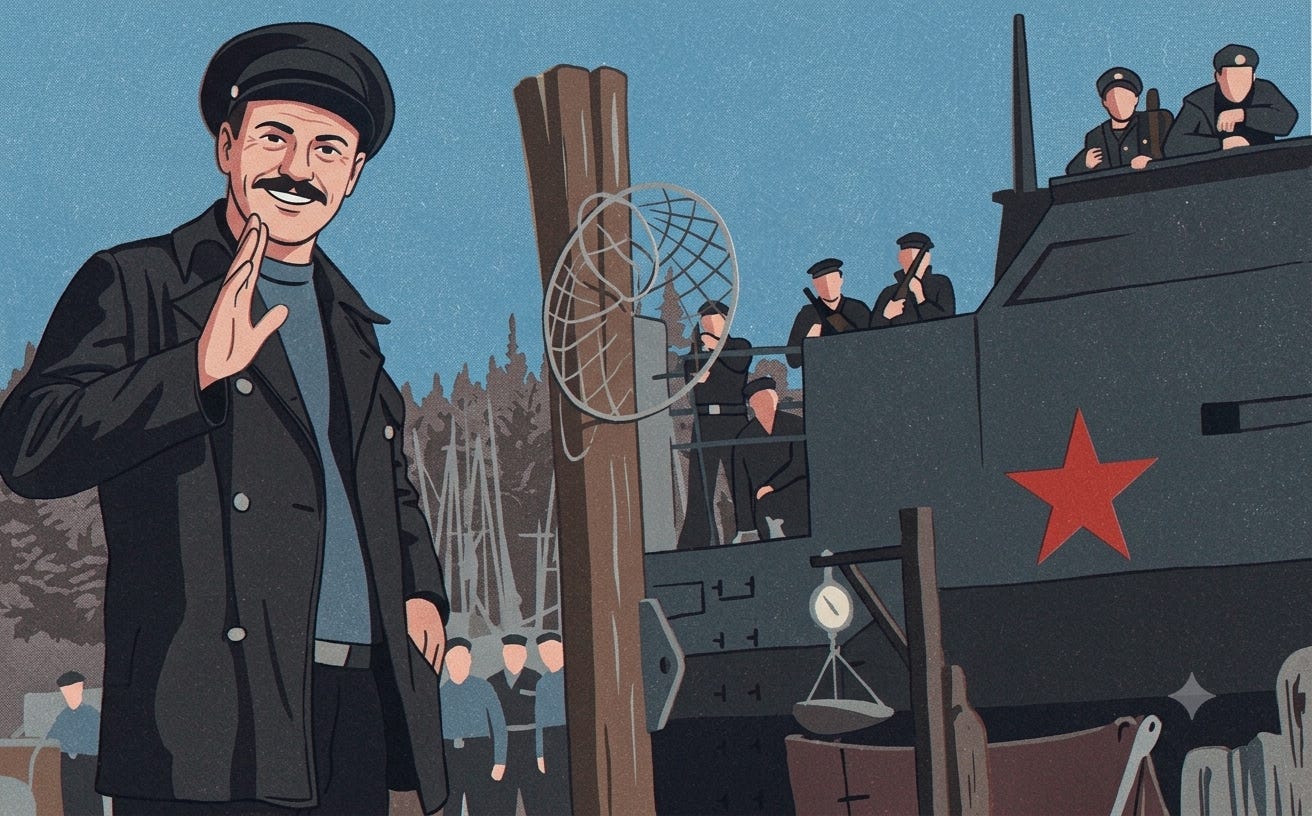
All week I’ve been thinking about this movie. I saw it as a young person. I didn’t get it at the time, but in my house “Everybody to get from street!” became an inside joke for well-meaning misunderstanding.
I’m starting to repeat that line every time I hear someone complain about the label of AI while they use it all the time.
What’s Next
If you have thoughts, feedback, or a perspective worth sharing, reach out: chmiel@ondiscourse.com. You might see your reaction in next week’s edition.
ON_Member Events
ON_Discourse Group Chat: GTM of AI part II: Pricing
Thursday, July 30 2-3pm
Zoom
We’re flipping the script on the Follow My Flow series. For one week only, we will be turning our Show and Tell series into a “how do I do that?” series that is built around the very aspiration of one of our most vocal members, who really wants to build an AI stack that efficiently distributes content across all of his channels.
How can he set up a stack that turns real-time analysis of industry trends into a prompt that helps him write his own content that AI can distribute?
Join us as we crowd-source a real-time AI build.
Join Domain in One Click
If you are reading this newsletter, chances are you are looking for more provocations and discourse in your professional life. What if I told you that you are one click away from meeting an AI agent that can bring ON_Discourse-level provocations to all of your group chats?
That’s Domain is AI that lives where you work, and it is one click away.
ON_Podcast
Dan, Toby, and Chmiel have a short argument about the difference between an app and an agent. Apps are deterministic, agents are probabilistic. In the curious language of AI that might mean that when an app fails it’s a bug, when an agent fails it’s part of the experience. Along the way they compare Google Calendar to Howie, stress-test the agentic browser, and try to figure out why consumer agents barely exist.
Details of the show:
What’s the difference between an app and an agent?
Why does the definition matter for anyone designing or investing in AI?
Is an agentic browser an agent, or just better search?
Is the consumer agent shortage a supply problem or a demand problem?
Why do we forgive human mistakes but not agent mistakes?