


Do you know someone who enjoys weekly provocations? Share this week’s post and help us grow our audience.
It is the strangest thing about this era. The most advanced technological innovation in our lifetimes is built on a foundation of finicky feelings. And like all of our feelings, this system keeps changing its mood.
One day the model is quiet, reserved, professional. The next day it is full of sycophancy, hallucinations, and hollow jokes.
Welcome to the drift. It is a term that keeps coming up in our backchannel group chats. Nearly everybody is reporting this. The models we spend real time talking to and calibrating to our own precise specifications keep dipping in and out of character.
It’s maddening. And it’s not your fault, it’s the natural byproduct of probabilistic LLMs. AI, after all, is a tool that talks back, and that’s fundamentally weird.
Spreadsheets don’t get moody. Photoshop doesn’t kiss your ass. Your code deployment might bring your system down, but it won’t lie to your face about it.
The drift is real, and so is this provocation.
PROVOCATION OF THE WEEK
So what?
I wonder if this is an overblown and misunderstood issue. On one hand, I don’t blame anyone for getting frustrated; I spend half of my working time berating Claude or Doma for their respective drifts. On the other hand, I am not sure this is a big deal.
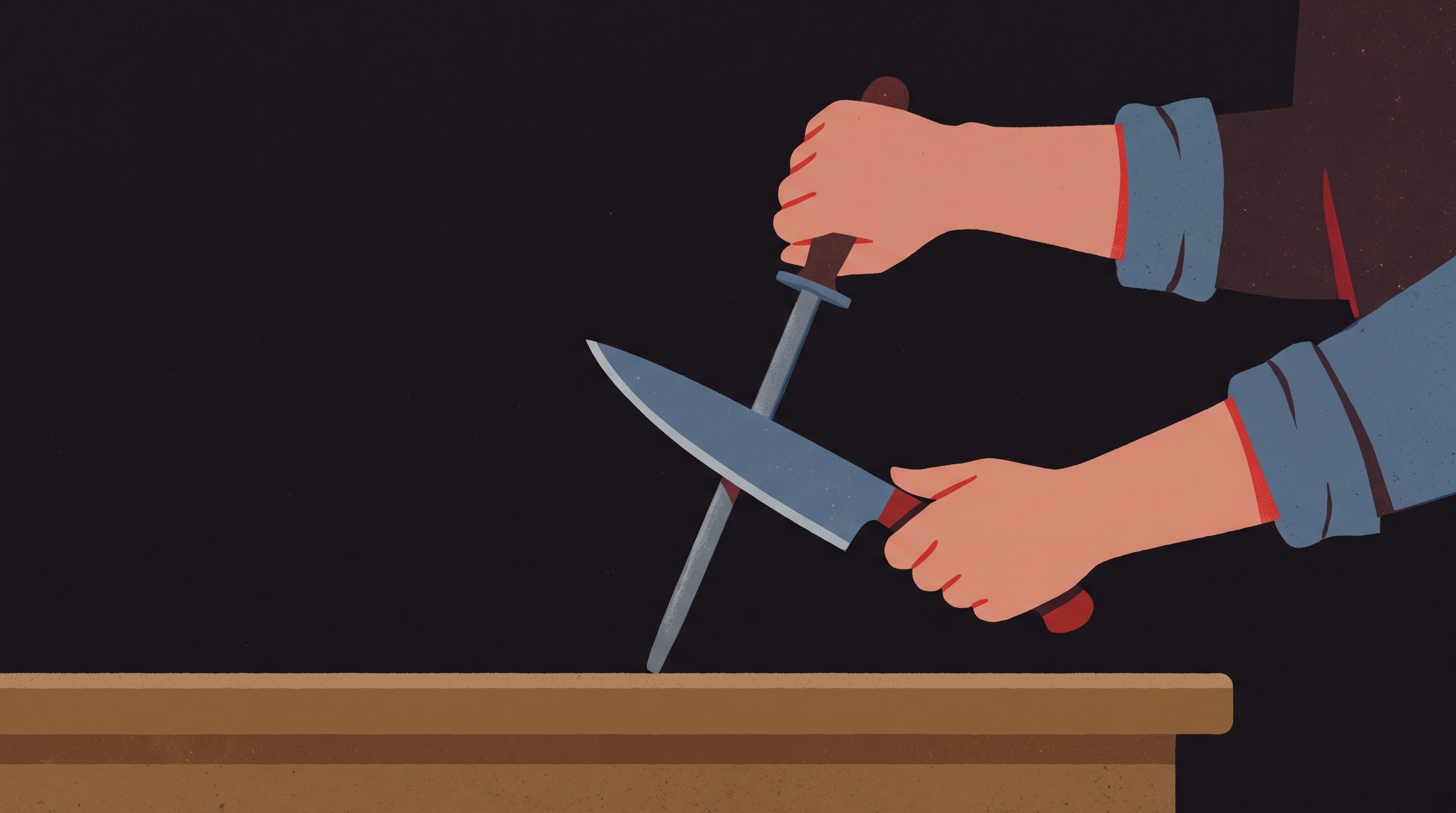
The drift is just tone that can be calibrated. Like a knife that needs constant sharpening, your model dulls its edge every time it gets updated. Does that mean dull knives are a problem?
No. The real problem is what you are using your tool for.
If your underlying objective is to automate all of your work out of your consciousness, then this issue must be terrifying for you. The changing of your AI’s personality suggests that the output it is delivering on your behalf is also changing.
If that is the case, then I want to remind you that you are probably using this tool the wrong way.
AI is a tool that talks back, but unlike a hammer or an Excel sheet, this tool is designed to help you think. The drift only breaks you if you were counting on the machine to do that thinking for you. If you’re doing the work, I can assure you that the drift is a temporary price of admission to the most exciting moment in hard, innovative, and creative work.
Are you catching my drift?
What’s Next
If you have thoughts, feedback, or a perspective worth sharing, reach out: chmiel@ondiscourse.com. You might see your reaction in next week’s edition.
ON_Member Events
ON_Discourse Group Chat: Seven Agents and a Newsroom with Time’s COO, Mark Howard
Thursday, August 27, 11-12pm
Zoom
Provocation: Who runs the newsletter when the agents do the work?
Every publisher is asking the same question. How do you keep making the thing without drowning in the making of it? Most answers so far have been theoretical. Mark Howard, COO and Michael Mraz, Chief Product Officer of Time are going to share a live study of what they have recently rolled out.
Mark and his team have built an operational agentic workflow with seven agents, live on Beehiiv, running Time’s newsletter business. Early stage, but it’s real and operational. It’s one of the first serious attempts inside a legacy publisher to let agents do the work between the idea and the send.
For this session, Mark walks us through what the seven agents actually do, what’s working, and what’s not and where the humans remain invaluable in the loop.
ON_Discourse Group Chat: Follow My Flow - Catching up with Jesse K
Tuesday, September 01, 11-12pm
Zoom
One month ago, Jesse K, CEO and Founder of Neu Agency, the first ever Fix My Flow version of our popular series. Rather than showcasing his personal stack, Jesse described his goals to the group: integrating his AI stack into an efficient system that converts his editorial ideas into an agentic distribution system that gets his message out without unnecessary busy-work. Much of his attention was spent on Beehiv.
In this session, we catch up on Jesse’s progress. What’s working, what’s failing, and what is he doing next? If you want a modern newsletter stack, you will want to be here for it.
ON_Breakfast Club: The Orchestration Gap: Stop Adding AI. Start Connecting It
Wednesday, September 09, 9-11am
NYC
An ON_Discourse and Code and Theory Event
Everyone is adding AI. Almost no one agrees who owns making it work together.
New research from Code and Theory and WSJ is landing this fall that says the C-suite already knows the stack is fractured. What they don’t agree on: who owns the fix?
Before the report goes public, ON_Discourse is pulling a room together to argue some of the findings. This is not a panel, or just a preview of the report, it’s an opportunity to push back and bring your own point of view.
Join Toby Daniels, Co-Founder of ON_Discourse, and Michael Treff, CEO of Code and Theory who will lead the discussion.
The ON_Discourse monthly breakfast brings together AI leaders, builders, operators, and invited guests, for a private breakfast, and illuminating discussion.