

What Are We Building?
Is AI worth the effort?

We are expanding our membership. If you want to be in the room with other executives who feel free to admit their own ignorance, let us know.
The discourse about AI is shifting. Can you feel it? Theoretical conversations about transformational potential are giving way to technical demonstrations of your own personal AI stack.
We do that at ON_Discourse. Every other week, we invite our members to “Follow my Flow,” ie, look under the hood of their own personal AI infrastructure and workflow. Think of it like show-and-tell for the AI era. These demonstrations are revealing a surprising effect.
The magic of this mysterious technology is starting to lose its luster. What looked like magic is turning into work.
Even worse, it looks a lot like SaaS.
The personal stack I’m describing integrates tools like N8N for workflow automation, MCP servers to connect claude code to local systems, all coalescing into a super-dashboard that can alert, prioritize, and act on any kind of personal or professional need. All of this sits in a monotype command-line interface that would scare-off any non-technical person.
You might mistake my summary for criticism. Far from it. The shift from potential energy to kinetic reality is where the most exciting conversations are happening.
Furthermore, the people I know who have dug into the nitty gritty details of AI infrastructure are some of the most ambitious, impressive, and dedicated members in our network. We can all learn from them.
Many of them have transitioned from a non-technical, strategic/creative narrators into DIY backend architects. You wish you could do what they have done. I know I do.
Nevertheless, I would be lying if I did not detect a subtle hint of ambivalence in many of these impressive upstarts. You can’t call it regret. You can’t call it woe. They are rightfully proud of their achievements. Nevertheless, their achievement came with a cost.
And this newsletter comes with a provocation.
Provocation of the week
Is it worth it?
I don’t ask this question lightly. The amount of initiative it takes to build these systems is genuinely impressive.
These are people who experienced and learned every middling detail that goes into software product. I’m talking the boring shit: what an API key is, what an .env file does and why it matters. They fixed broken webhooks, rate limits, and learned the hard way when file naming conventions inexplicably stopped working.
The arduous process they went through left a mark. Gone is the wide-eyed optimist. In its place is a battle-hardened veteran with a realistic grasp of this technology and an undeniable fascination with doing more.
But I can’t ignore the fact that there’s an unspecified cost that comes with this accomplishment.
What they gained
On one hand, the people who do this gain something real: a level of autonomy that cannot be easily replaced.
They’re not dependent on some vendor’s roadmap or waiting for a tool that might never arrive. They built the thing they needed. They can modify it, expand it, adapt it as their needs change.
But there’s something else, too.
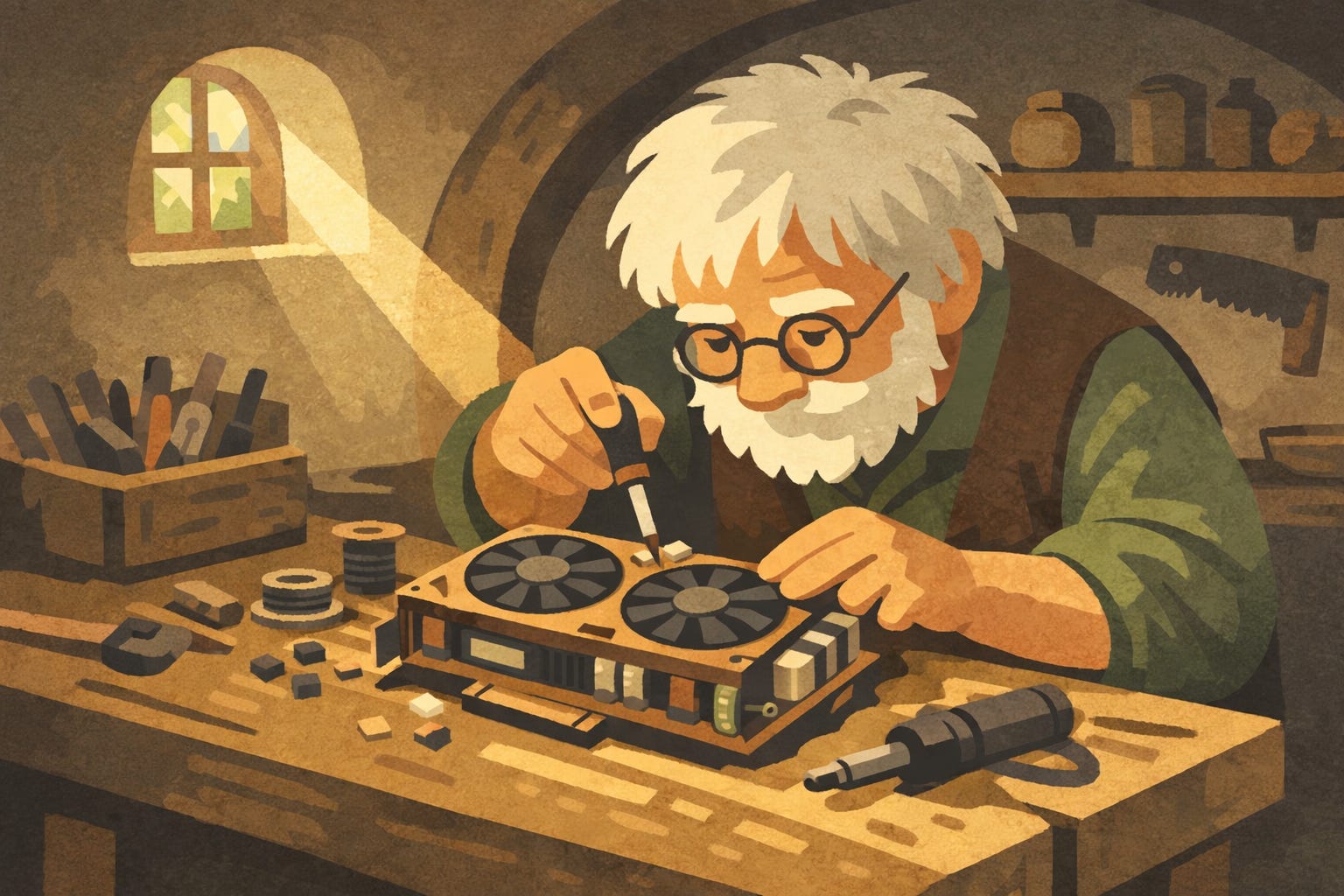
They’ve developed a new kind of creativity. One that replaces searching for concepts with searching for infrastructure. The creative act shifts from “what’s a good idea?” to “what technical components could I connect to make this work?” When they find it, they spend hours, sometimes days, figuring out how to actually make it function instead of writing decks.
This is the new creativity for the AI era. Integration over ideation.
Their output is higher. Their margins are better. They have more ideas than before and they’re constantly finding new ways to use what they’ve built. Those are real wins.
What they haven’t necessarily gained - yet
But here’s what’s harder to see: they haven’t necessarily gained materially better ideas. Just more capacity to execute them. More speed. Some new margin.
And there’s something else they all know, even if they don’t say it out loud: their technical schematics are subject to the whims of an accelerated innovation cycle. The foundation they’ve invested hundreds of hours learning could shift under their feet tomorrow. The system they built could be rendered obsolete by the next model update or platform change.
This is a risk that threatens to wash away their work.
Bravely, they accept it.
So what does this mean for the rest of us?
If you’re like me - standing at the edge of this new kind of technical creativity, trying to decide whether to dive in - you might want to weigh these considerations carefully.
Many of the things you’d need to build now might not be necessary in six months. The tools might catch up. Someone might ship the platform that just works.
Then again, maybe they won’t.
The uncertainty is either going to hold you back, or like these members, set you free.
What’s Next?
If you have thoughts, feedback, or a perspective worth sharing, reach out: chmiel@ondiscourse.com. You might see your reaction in next week’s edition.
You can follow updates about (domain) on our substack dedicated to that platform.
ON_Member Events
ON_IRL Events (NYC)
ON_Breakfast Club: One World Trade Center, New York
Wednesday, January 14, 9am-11am ET
Join us for a private breakfast, and breathtaking views from the 69th floor of One World Trade.
ON_Speakeasy
Wednesday, January 28, 6pm-8pm ET
No agenda, no provocations, just informal holiday drinks and great conversation with members and friends of ON_Discourse.
ON_Group Chats
Follow My Flow (Pulling back the curtain on someone’s AI stack)
Tuesday, January 20th, 11am-12pm ET
This is your backstage pass into someone’s real AI workflow, a candid, step-by-step reveal of how their stack actually works in practice. This week’s Host: Craig Hepburn, Founder Rain Ventures.
Are you interested in participating in the discourse? We are accepting applications for 2026 now.